History

Javier Sedano
WriterA watch, a wrist and a silent revolution
“A special-order book from the period records that on 8 June 1810 the Queen of Naples requested two rather particular pieces: a carriage clock with grand complications and a repeating wristwatch, for which 5,000 francs were charged”. Emmanuel Breguet, a descendant of Breguet's founder and the brand's Heritage Director, was referring to what is considered the first wristwatch in history -number 2639-, created for Caroline Murat, Queen of Naples and sister of Napoleon Bonaparte. Delivered to her in 1812, it is regarded as a lost icon whose story continues to fascinate.
That watch, which transcends mere technical complexity, in fact symbolises the beginning of a new chapter in the world of watchmaking and in that of women: the history of the ladies' watch. Today it would be impossible for us to think of the two in isolation, yet the truth is that -as is so often the case- this union has been the result of years of social openness, technical evolution and new values.

Fortunately, the Breguet archives preserve the story of that first wristwatch, which featured a silvered dial with guillochéengraving, quarter repeater, moon phase and thermometer functions, and was fastened with a bracelet of hair woven with gold thread. The piece sent to Caroline Murat gave rise to the ‘Reine de Naples’ collection, a fusion of fine watchmaking and jewellery that has been enriched over time with different colours, materials and functions.
A masterpiece: ‘Marie-Antoinette’
A few years earlier, in the 1780s, Queen Marie Antoinette had already shown her admiration for A.-L. Breguet's creations and was a regular client of the master watchmaker's workshop on the Quai de l'Horloge, in the very heart of Paris. That relationship gave rise to one of Breguet's masterpieces, the acclaimed watch No. 160, known as the ‘Marie-Antoinette’, which the queen never saw completed (she died on the guillotine on 16 October 1793).
The story goes that in 1783 an officer of the royal guard commissioned a pocket watch for the queen, one that was to incorporate every refinement, complication and function known at the time. The truth is that Breguet finished the piece many years after the French Revolution and kept it in a safe place, as a testament to his loyalty to the queen.

But beyond those occasional, very early pocket creations, Murat had already opened the floodgates for the wristwatch. Paradoxically, it was women of the aristocracy and the upper bourgeoisie who popularised the wrist watch -considered more a piece of jewellery than a tool- long before men, who continued to use pocket watches well into the last century.
As the nineteenth century advances we reach the year 1868. Patek Philippe, an independent Geneva firm, began production of what is believed to have been the first wristwatch made in Switzerland, a unique piece in yellow gold. One of the most influential and powerful women of the time, Countess Koscowicz of Hungary, purchased on 13 November 1876 the piece known as No. 27,368, a true watch to be worn on the wrist, whose bracelet already played a secondary role.
Many consider that this example definitively set the fashion for wearing watches on the wrist rather than on the body. Today, this splendid piece of manufacturing can be seen at the Patek Philippe Museum in Geneva.
Emancipation and modernity
And so we arrive at the first years of the twentieth century. Cartier definitively established the wristwatch and drove a new conception of the watch as a practical object. One of the most significant creations among women's pieces is the appearance of its Santos-Dumont wristwatch, and among them all the one conceived in 1912 stands out: yellow gold, sapphire cabochon and a leather strap, one of the particularly unusual delicacies of those early watches made by Cartier.
The first decades of the new century marked a turning point in the evolution of ladies' watches. They were no longer regarded solely as symbols of elegance and social status; the new creations adapted to the new times and to the radical change taking place in fashion, design and every corner of society. New trends that pointed the way to the modern watch.

After the First World War, women began to gain social and professional prominence. Watches adapted to the Art Déco aesthetic and projected a new modernity that was beginning to take hold, with sophisticated designs combining functionality and fashion, emancipation and modernity. One example is the Rolls by Blancpain, considered the first automatic wristwatch for women, which appeared in 1930 and represented a qualitative leap in the technical evolution of ladies' wrist pieces.
The expansion of the ladies' watch
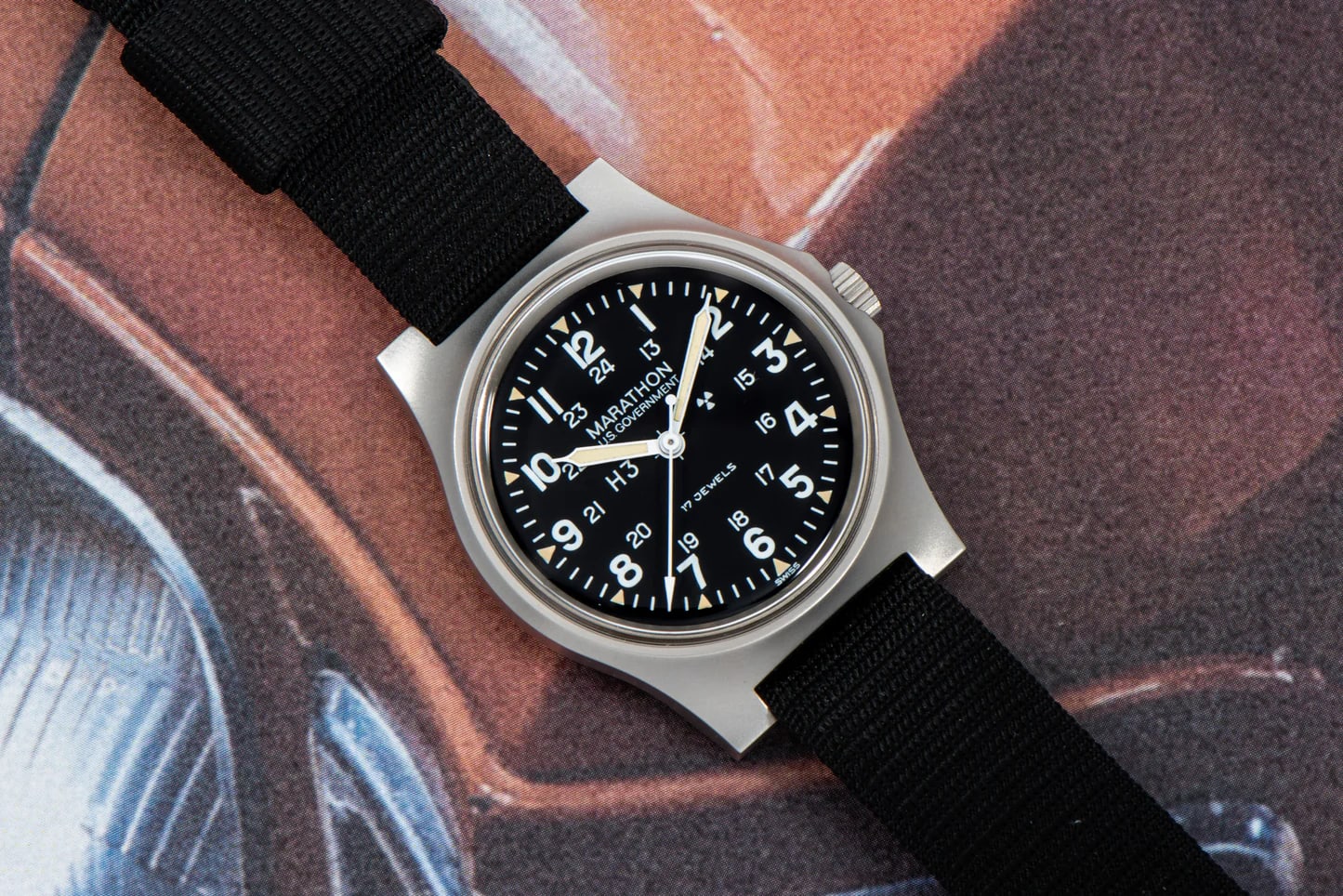
But all that exquisite evolution, with its touches of sensuality and sophisticated design, was cut short by the outbreak of the Second World War, a period dominated by functional, robust and practical watches, even in the ladies' sphere. Military watches dominated this chapter of watchmaking, characterised by larger, more legible dials and more hard-wearing straps. Less sophistication for a tool that had to meet everyday challenges.
Tras el conflicto bélico, el uso de relojes automáticos y cronógrafos se hizo más común entre las mujeres, lo que supone una evolución técnica indiscutible en todas las manufacturas. En realidad, durante los años 50 y 60 la relojería femenina vive una auténtica expansión. Movimientos y piezas cada vez más pequeñas y precisas permitieron crear relojes de máxima eficacia técnica sin perder la elegancia propia de esas piezas.

Away with conventions
Y así hasta la revolución del cuarzo de los años 70, que permitió relojes más asequibles y accesibles para millones de mujeres. El reloj dejó de ser un objeto exclusivo y pasó a formar parte de la vida cotidiana.
The twenty-first century blurred the traditional revolution between men's and women's watches. Many women today opt for historic, sports or large-sized watches, choosing their pieces for personality and taste rather than by gender conventions.
Today, technical innovations in ladies' watches go beyond aesthetics, and these pieces have already moved past every one of the best-known conventions.

The history of the women's watch is also the history of women's social evolution. What began as a delicate piece of court jewellery ended up becoming a tool of independence and a symbol of modernity. From the first watch bracelets of the nineteenth century to contemporary pieces, the watch has accompanied generations of women in a continuous process of conquering time of their own.