Opinion

Víctor del Ser
ContributorThe Ingenieur's new rival? Raymond Weil VS. IWC
Two ways of understanding the same genre
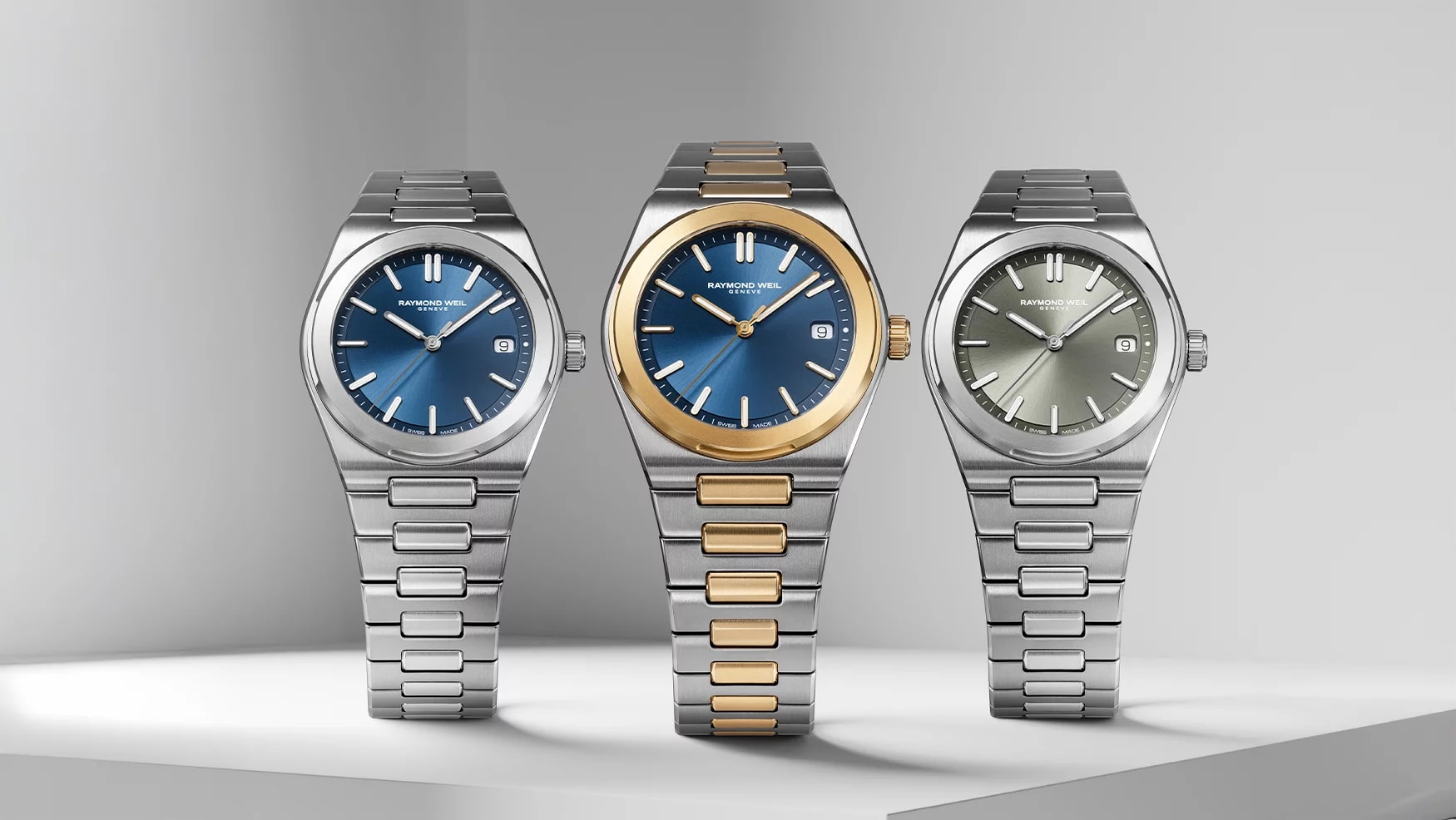
Raymond Weil has celebrated its fiftieth anniversary with the launch of A.R.T., its first collection with an integrated bracelet, a genre the Geneva manufacture had deliberately avoided until now, despite almost five decades in accessible Swiss watchmaking. The flagship model, the 38 mm A.R.T. Date, steps squarely into territory dominated by offerings at every price point, and its resemblance to the IWC Ingenieur has been noted by much of the specialist press from the very day of its presentation.
The Ingenieur relaunched by IWC in 2023 on the basis of Gérald Genta's original 1976 design has established itself as one of the benchmarks of the integrated sports segment within high-end watchmaking, and its language of sculpted bezel and H-link bracelet is today an unavoidable point of reference for any brand venturing into this category. Comparing the two watches is therefore not an arbitrary exercise but an almost inevitable one, although the interesting part is seeing to what extent the A.R.T. manages to capture the essence of the concept without IWC's resources or heritage behind it.

Technical specifications
The Raymond Weil A.R.T. Date houses a stainless steel case measuring 38 mm in diameter and 9.95 mm thick, with satin-brushed surfaces and polished bevels, a signed fluted crown at 3 o'clock, sapphire crystal with anti-reflective treatment and 100 metres of water resistance. Inside beats the automatic caliber RW4420, developed with Sellita on the basis of the SW200-1, with a frequency of 4 Hz (28,800 vph) and a 41-hour power reserve.
The IWC Ingenieur Automatic 40, for its part, uses a 40 mm stainless steel case with a screwed-down bezel, a soft-iron inner cage for anti-magnetic protection, a sapphire crystal and likewise 100 metres of water resistance. Its bracelet, also integrated and with H-shaped links, draws directly on Gérald Genta's 1976 design. The movement is the IWC manufacture caliber 32111, whose architecture is related to the Baumatic from Baume & Mercier, which runs at 4 Hz (28,800 vph) and offers a remarkable 120-hour power reserve. The Ingenieur's dial reproduces the characteristic embossed grid pattern of the original model.
The entry price of the A.R.T. Date in steel is 1,995 dollars (2,095 dollars for the two-tone version with yellow gold PVD), while the Ingenieur Automatic 40 in steel sits at around 12,800–12,900 dollars, depending on the market and dial version.

Advantages and drawbacks of the Raymond Weil A.R.T.
The A.R.T.'s great strength is its balance of design, finishing and price. For less than 2,000 dollars, Raymond Weil offers a well-proportioned case, an integrated bracelet with a level of finishing that comfortably exceeds what one would expect in that range, and a Swiss but generic automatic movement. Its 38 mm size and mere 9.95 mm thickness make it especially comfortable and versatile on the wrist. On the downside, the closed case back prevents any appreciation of the RW4420 caliber. Its 41-hour power reserve is relatively short by more modern standards, and its aesthetic resemblance to the Ingenieur is, for part of the specialist press, too obvious to speak of a fully original design, which can detract from its personality.

ADVANTAGES AND DRAWBACKS OF THE IWC INGENIEUR AUTOMATIC 40
The Ingenieur offers what the A.R.T. cannot: the original essence of Genta's design, an in-house movement with a 120-hour power reserve that borders on state of the art in its category, and genuine antimagnetic protection inherited from the technical vocation that gave rise to the model in the fifties. The result is a watch with historical backing, a level of finishing and a brand solidity that justify its positioning in the fine watchmaking segment. Its main drawback is, obviously, the price, at around 12,800 dollars. It is out of reach for the vast majority of buyers, and its 40 mm case, though well balanced, is less versatile on small wrists than that of the A.R.T. Add to this a waiting list and limited availability.

Conclusion
More than direct competitors, the A.R.T. and the Ingenieur represent the two extremes of a single spectrum: one shows that the language of the integrated sports watch can be democratised without losing elegance or quality of execution, while the other reminds us why that language, when it bears the signature of its original creator and the backing of a century-old manufacture, still holds a value that goes beyond the case and the bracelet.